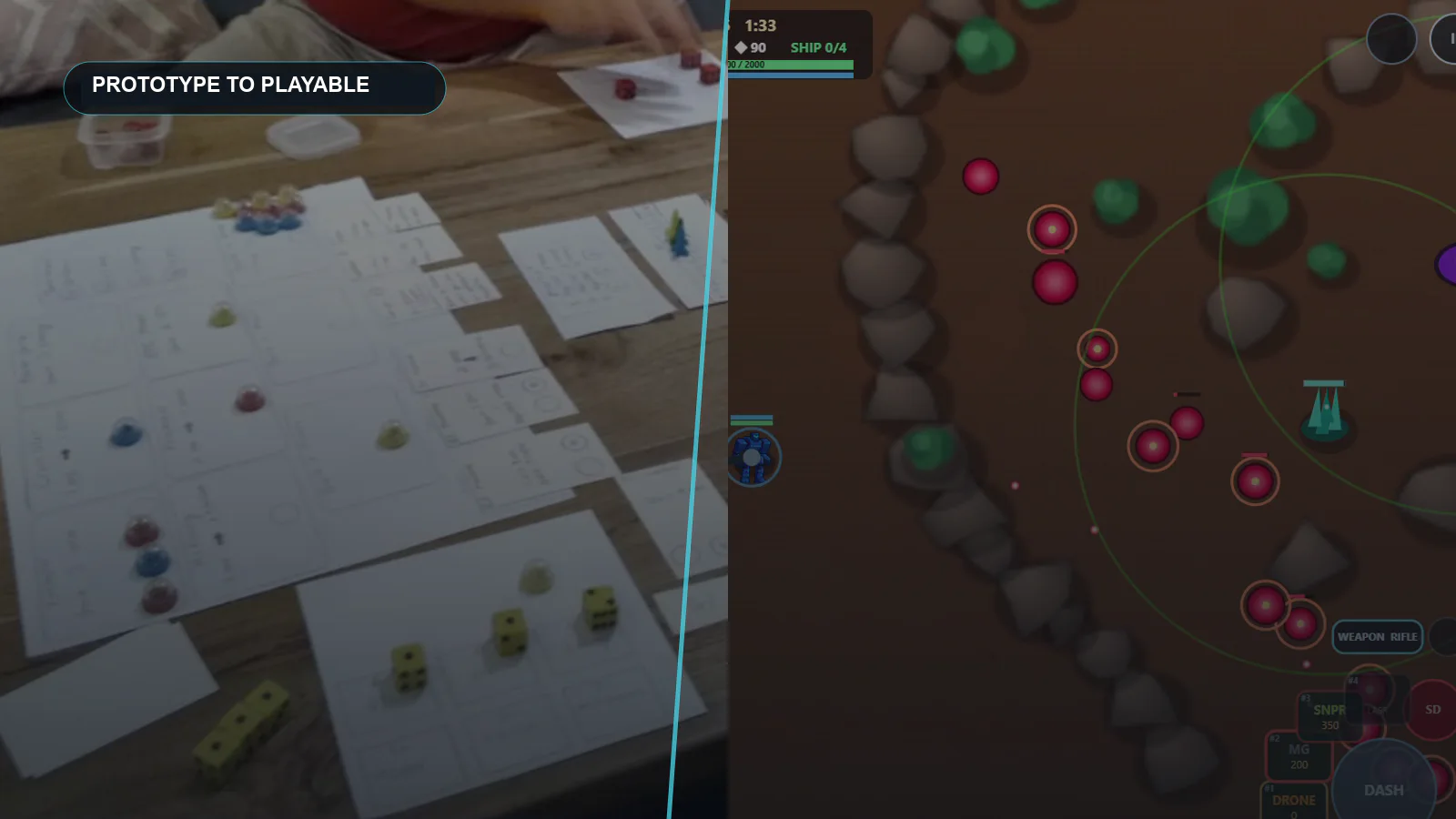
Building a Vertical Slice Faster With AI Tooling
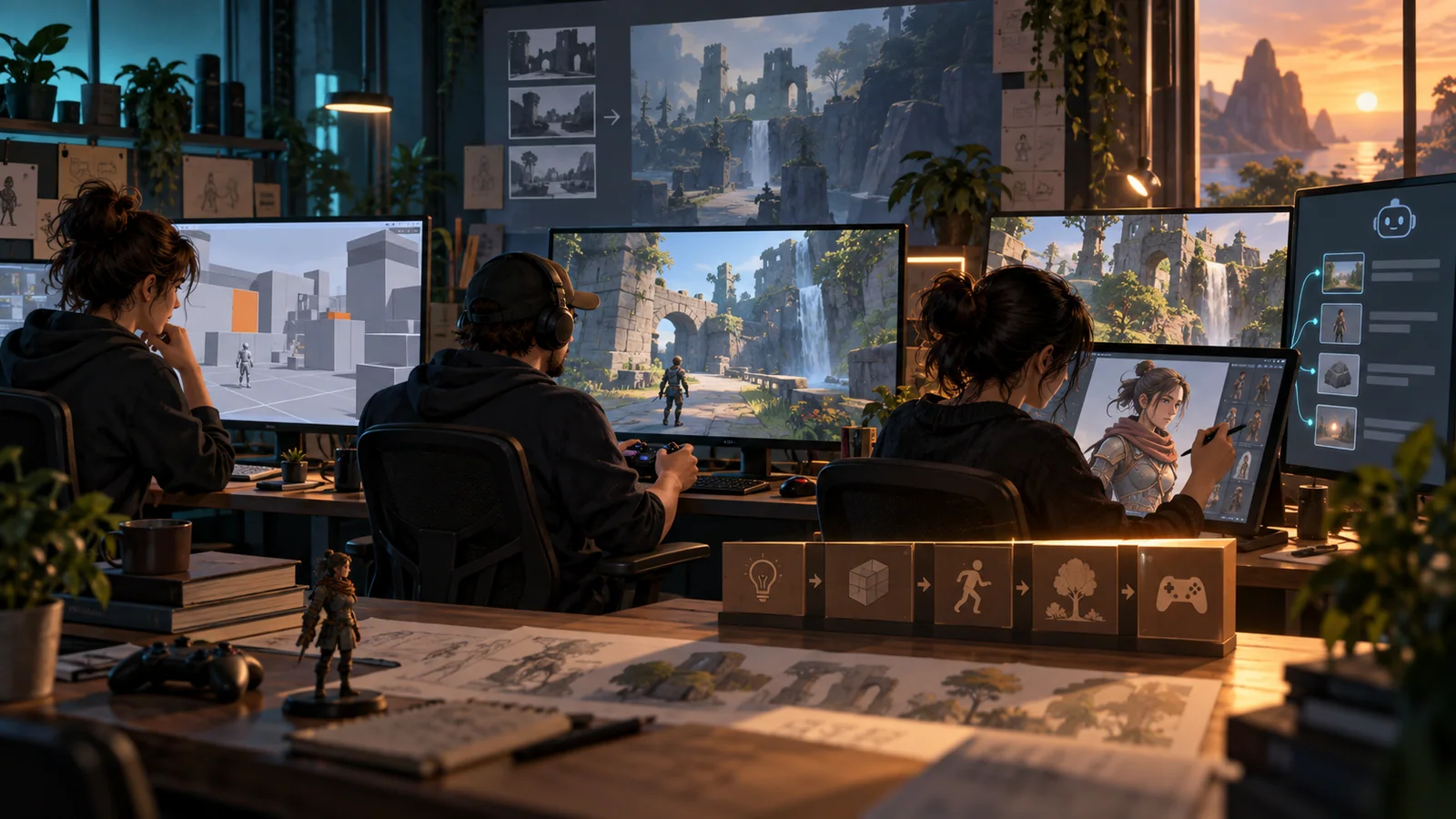
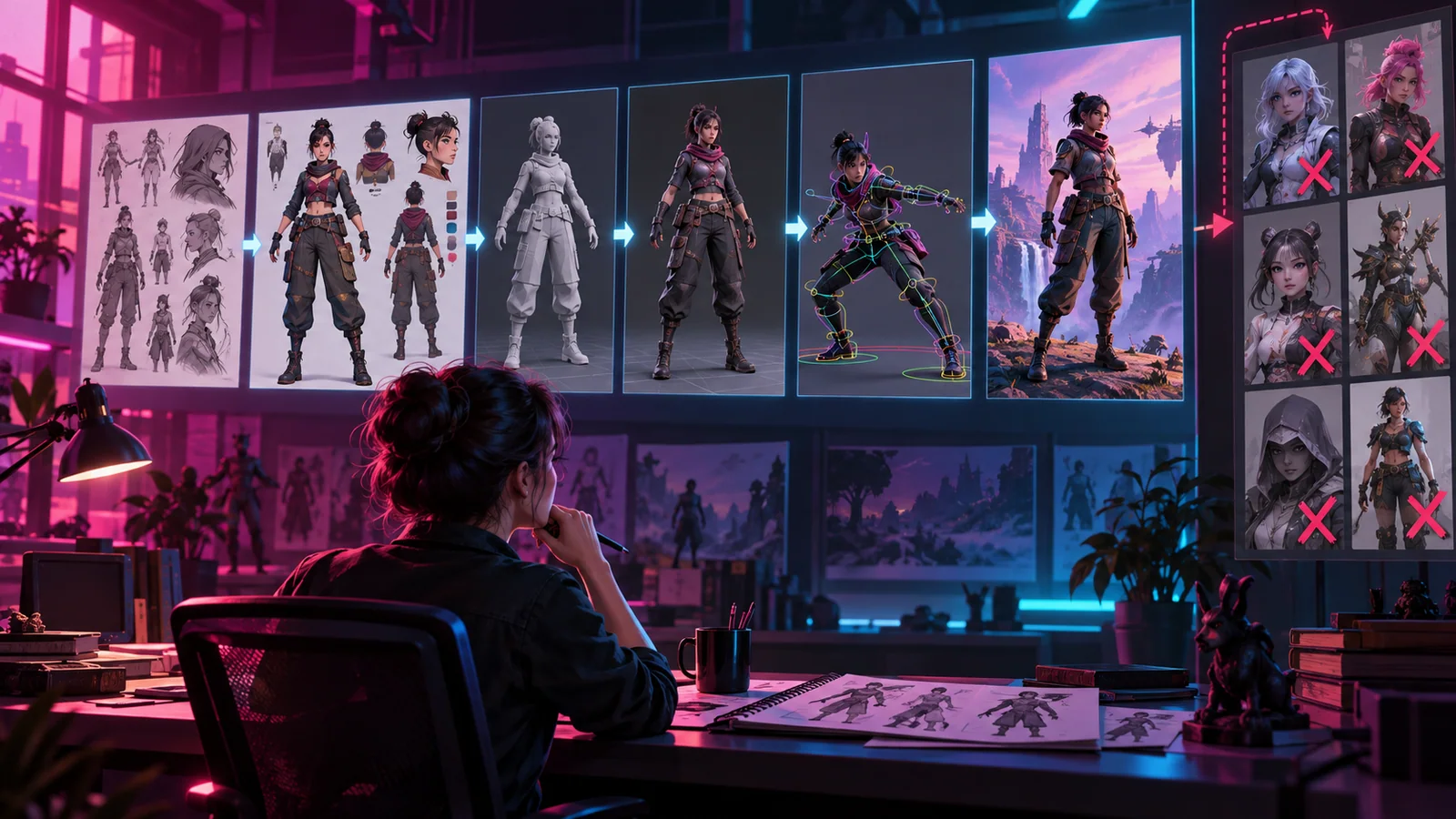
Image: The Game Design
A vertical slice is a promise. It says: this small piece of the game is real, finished to shipping quality, and the rest of the game will feel like this. That promise is what convinces a publisher, a platform, or your own team to commit. And it is exactly why so many slices fail. Teams spread their effort thin, polish everything a little, and prove nothing convincingly.
AI tooling in 2026 changes the math, but not the principle. The job of a slice is still to make one experience undeniable. What AI does is let a small team fake the surrounding context fast enough that the real thing gets all the attention it deserves. Used well, that is a genuine speed multiplier. Used carelessly, it produces a slice that looks finished and proves nothing.
Decide what the slice must prove
Before any tool opens, name the one experience the slice exists to sell. A single combat encounter. A single traversal loop. A single conversation system. Everything in the slice is either that thing, finished to ship quality, or context that supports it, faked as cheaply as possible.
Get this wrong and no amount of tooling saves you. Get it right and AI becomes obvious about where it belongs.
What to fake, what to finish
The core discipline of an AI-assisted slice is knowing which side of the line each asset sits on.
| Element | Finish it (human quality) | Fake it (AI-assisted) |
|---|---|---|
| The core loop | Yes, this is the whole point | No |
| Hero asset in frame | Yes, players judge the promise here | No |
| Background props and set dressing | No | Yes, generate and greybox |
| Placeholder audio and barks | No | Yes, temp with AI drafts |
| Menus and non-slice UI | No | Yes, minimal and rough |
| Boilerplate and scene setup | No | Yes, let a pair-programmer handle it |
In-editor tools like Unity Muse target exactly this stage: fast exploration and scaffolding inside the engine so a small team can stand up the supporting context in hours rather than days. That saved time is the point. It goes straight back into finishing the one thing the slice must prove.
Keep the slice honest
The danger with AI tooling is a slice that over-promises. If AI polish makes the faked context look as finished as the real core, you have built a demo that lies about the state of the game. When the full production cannot match it, you pay the difference in trust.
Two habits keep a slice honest:
- Draw a visible line between real and faked. You and your team should always know which assets are shipping quality and which are scaffolding. If you lose track, the slice is lying to you too.
- Pressure-test the promise. Ask whether the rest of the game can actually be built to the standard the core sets. If not, the slice is aimed too high, and AI just helped you reach an unreachable bar faster.
Teams that respect this, including the way our studio at BudLeiser approaches a slice, treat AI as a way to buy time for the core, never as a way to inflate the surface.
FAQ
How long should a vertical slice take with AI tooling? Shorter than before, but the core still takes real time. AI compresses the context around it, not the finished experience itself.
Can AI build the whole slice? No. It can scaffold, greybox, and draft the supporting content. The one experience the slice must prove has to be finished by hand.
What is the most common mistake? Polishing everything equally. A slice that is uniformly 70 percent finished proves nothing. Push the core to 100 and fake the rest.
A vertical slice is not about doing a little of everything well. It is about doing one thing completely and faking the rest convincingly. AI tooling in 2026 is very good at the faking, which is exactly why it frees you to finish the part that actually matters.
ai-game-developmentvertical-slicegame-productionindie-devunity-muse2026-trends