Where AI Helps (and Where It Hurts) in Game Art Pipelines
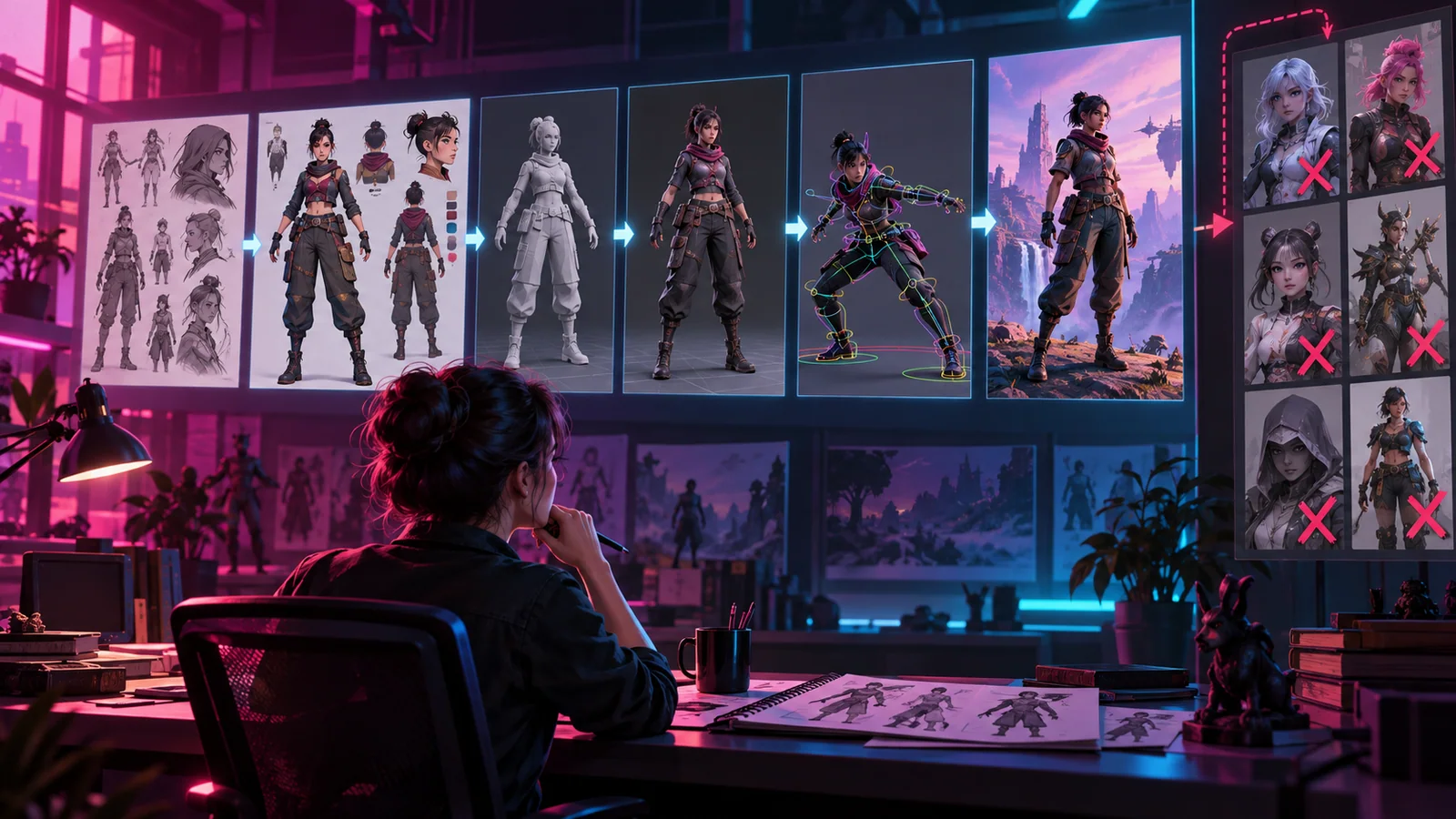
Image: The Game Design
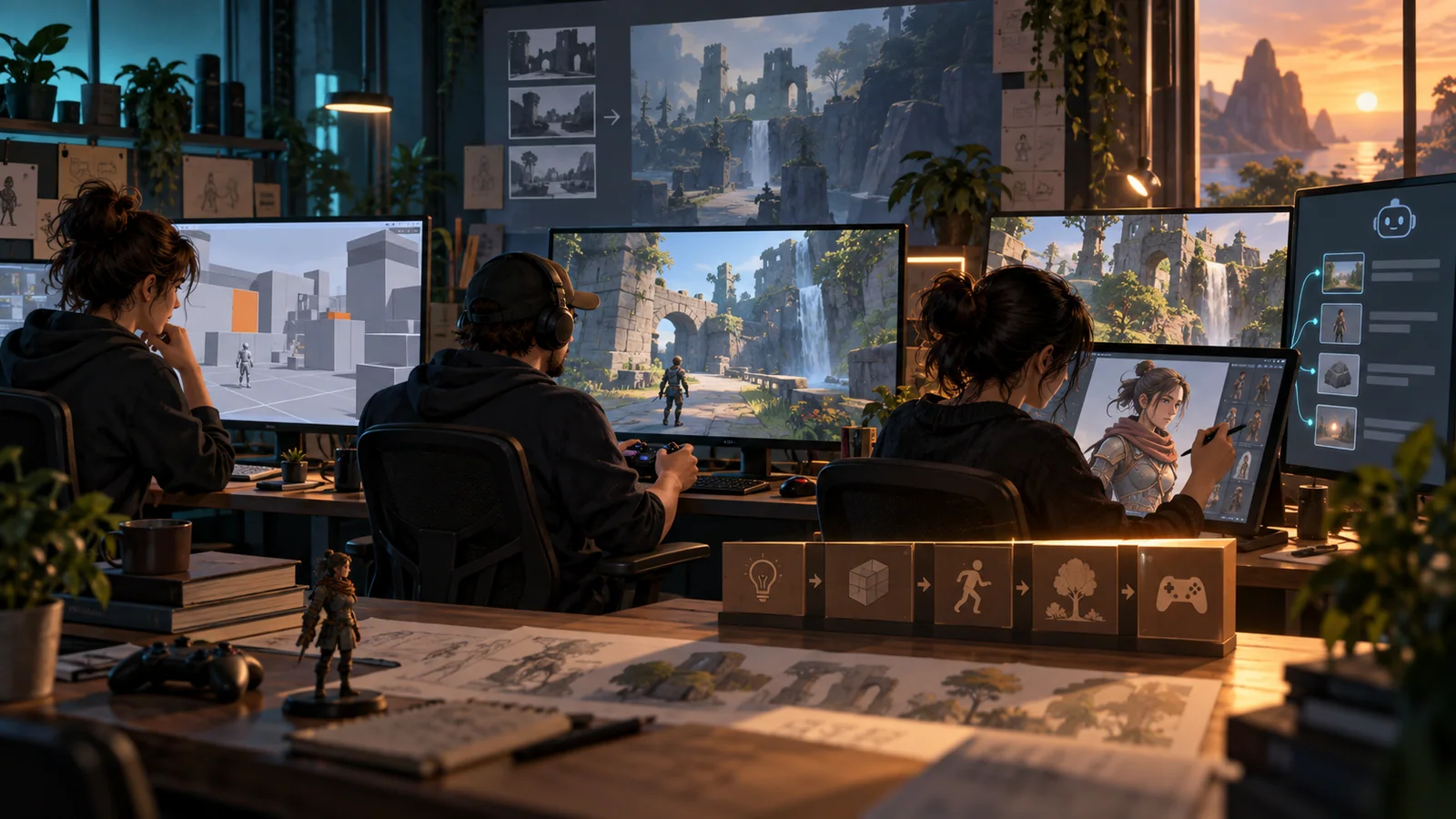
There is a clean line running through every game art pipeline in 2026, and knowing where it sits is the difference between AI saving you weeks and AI quietly eating them. On one side of the line, generative tools are an obvious win. On the other side, they create work that looks like progress but is actually cleanup. Most studios that get burned simply put the line in the wrong place.
The temptation is to judge AI art by whether a single image looks good. That is the wrong test. A pipeline is not one image; it is hundreds of assets that have to agree with each other, ship on a schedule, and legally belong to you. Judged that way, the honest picture is neither hype nor doom. It is a map of stages where AI helps and stages where it hurts.
Where AI genuinely helps
The strongest, least controversial wins all sit early in the pipeline, before anything is final.
- Concept exploration. Generating twenty rough silhouettes or mood frames in an afternoon lets your art director spend energy choosing a direction instead of grinding toward one. This is the single most defensible use of AI art in 2026.
- Placeholder and greybox assets. Temp textures, rough props, and filler UI let playtesters react to the game instead of to missing content. The rule is absolute: placeholders stay placeholders and a real artist replaces them before ship.
- Reference and iteration fuel. AI is a fast way to visualize “what if this were more brutalist” or “what if the palette were colder” so a human can make the call with something concrete in front of them.
- Tedious variation. Once a look is locked by a person, generating tiling variants or rough alternates removes busywork that never required taste.
Notice the pattern. Every win is about exploration, speed, and the disposable middle of a task. None of them is about final, shippable, on-brand art.
Where AI quietly hurts
The damage clusters at the end of the pipeline, where the qualities that make a game look like itself live.
Consistency across a set. A single AI image can be gorgeous. A hundred of them rarely agree on style, proportion, or lighting logic. Wrangling that inconsistency into a coherent set can cost more than making the assets cleanly the first time.
Ownership and licensing. In 2026 this is a real production risk, not a footnote. You need to know what a model was trained on, whether the output is something you can defend as yours, and what your storefront and platform holders require you to disclose. Building a game’s visual identity on assets with murky provenance is a liability you may not discover until it matters most.
The “good enough” trap. AI output that is 80 percent right is the most dangerous kind, because it invites you to ship it instead of finishing it. That last 20 percent, the deliberate imperfections and intentional choices, is exactly what separates a game with a look from a game with a vibe.
A simple test for any asset
Before you let a generated asset into the pipeline, ask three questions:
- Is this final, or is it a placeholder or reference? If final, be very careful.
- Does it have to agree with a set of other assets? If yes, a human should own the style.
- Can I clearly explain why this belongs to me? If not, do not build on it.
Teams that respect that line, and only that line, treat AI the way our studio at BudLeiser does: as a compression tool for the slow, unfun middle of art production, with human direction firmly on both ends.
FAQ
Can AI art carry a whole game’s look in 2026? Not credibly. It can explore and fill, but a coherent, ownable visual identity still needs human art direction across the set.
Is AI-generated placeholder art safe to use? For internal testing, generally yes, as long as it never survives to the final build. The risk rises the closer it gets to ship.
What is the biggest hidden cost? Consistency cleanup. Individual images are cheap; making a large set agree with itself is where the saved time quietly disappears.
Put AI at the front of your art pipeline and it is one of the best tools you have. Push it to the back, where consistency, ownership, and taste decide everything, and it starts costing more than it saves. The whole skill is knowing where the line sits.
ai-game-developmentgame-artart-pipelineindie-devgenerative-ai2026-trends